Aswar Press Home

Category

Media & Publishing

22 articles

From Disagreement to Division: The Editorial Architecture That Converts Policy Into Combat

The line between informing the public and inflaming it is often drawn not in the reporting itself but in the decisions made before a single word is written — the headline chosen, the sources prioritized, the framing that determines whether a policy question becomes a civic conversation or a tribal confrontation. A close examination of recent coverage patterns suggests that many American newsrooms have not fully reckoned with their own role in shaping the national divisions they simultaneously re


The Fine Print Shift: How News Outlets Are Quietly Rewriting the Terms of Your Digital Trust

Major American news organizations have systematically updated their data collection and user tracking policies in ways that few readers ever notice. An examination of specific policy revisions, paired with analysis from privacy researchers, reveals a growing contradiction between the editorial values these outlets publicly champion and the surveillance infrastructure quietly operating beneath their platforms.

Off the Record on Themselves: The Uncomfortable Truth About Journalism's Reluctance to Report on Journalism

Off the Record on Themselves: The Uncomfortable Truth About Journalism's Reluctance to Report on Journalism

Reporters who pursue corporate wrongdoing, governmental misconduct, and institutional failure with professional tenacity routinely decline to apply the same standards to their own industry. The reasons range from economic precarity to genuine conflicts of interest, but the cumulative effect is a significant gap in the American public record. Understanding why this gap persists requires an honest accounting of the pressures that create it.

Frozen in Time: The Quiet Crisis of Unverified Information Living Inside America's News Archives

Frozen in Time: The Quiet Crisis of Unverified Information Living Inside America's News Archives

Decades-old articles containing factual errors continue to circulate online, often ranking higher in search results than the corrections that followed them. Major American newsrooms lack the staffing, technical infrastructure, and institutional will to systematically audit their own historical records. The consequences for public knowledge are more significant than the industry has yet acknowledged.

Guarding the Messenger: How American Journalists Are Reinventing Source Protection in the Age of Digital Surveillance

Guarding the Messenger: How American Journalists Are Reinventing Source Protection in the Age of Digital Surveillance

As surveillance technology grows increasingly sophisticated, the journalists who rely on confidential sources face a fundamentally altered landscape. Newsrooms across America are quietly overhauling the methods they use to shield whistleblowers and informants, deploying encrypted tools, compartmentalized workflows, and renewed ethical frameworks. What emerges is a portrait of an industry in adaptation — and of the very real human consequences when those adaptations fall short.

Buried in the Archive: How American Newsrooms Let Factual Errors Quietly Outlive the Stories That Contained Them

Buried in the Archive: How American Newsrooms Let Factual Errors Quietly Outlive the Stories That Contained Them

Millions of Americans rely on digital news archives as sources of record, yet a growing body of evidence suggests that factual errors embedded in older articles frequently go uncorrected for years—sometimes indefinitely. Without systematic processes for retrospective fact-checking, newsrooms risk allowing their own archives to function as engines of sustained misinformation. This investigation examines how major U.S. outlets approach the problem, and why the corrections that matter most are ofte

Reporting From Afar: How Distance Between Journalists and Communities Distorts the American News Record

Reporting From Afar: How Distance Between Journalists and Communities Distorts the American News Record

When reporters cover communities they have never lived in, the resulting stories often carry invisible distortions — missed context, misread tensions, and structural blind spots that no amount of careful writing can fully correct. This examination traces how the geography of American newsrooms shapes the geography of American understanding, and asks whether remote reporting is genuinely narrowing that gap or quietly widening it.

Published and Forgotten: The Accountability Gap That Opens When Newsrooms Move On From Their Own Investigations

Published and Forgotten: The Accountability Gap That Opens When Newsrooms Move On From Their Own Investigations

Major investigative stories routinely vanish from newsroom attention the moment they hit publication, leaving the public without answers to the most consequential questions they raised. Structural pressures, economic realities, and institutional habits conspire to push journalists toward the next headline rather than the sustained scrutiny accountability demands. A small number of American newsrooms are challenging this pattern — and their results suggest the journalism profession has been leavi

Show Your Work: Why Journalism's Next Credibility Leap Depends on Opening the Reporting Process

Show Your Work: Why Journalism's Next Credibility Leap Depends on Opening the Reporting Process

A growing number of American news organizations are publishing the raw materials behind their investigations—interview transcripts, source documents, and methodological notes—alongside the finished story. This shift toward process transparency is redefining what it means to earn a reader's trust, and the outlets embracing it are finding that visibility itself has become a form of editorial authority.

Hidden in Plain Sight: Why America's Biggest Newsrooms Keep Missing the Corporate Wrongdoing Right in Front of Them

Hidden in Plain Sight: Why America's Biggest Newsrooms Keep Missing the Corporate Wrongdoing Right in Front of Them

Despite commanding substantial investigative resources, many of America's most prominent newsrooms repeatedly fail to surface significant corporate misconduct — stories that smaller outlets and independent journalists ultimately break first. An examination of institutional incentives, advertiser dynamics, and editorial gatekeeping reveals a pattern that raises serious questions about who the mainstream press is truly serving.

From Tip Line to Town Square: How Journalists Are Letting Communities Lead the Story

From Tip Line to Town Square: How Journalists Are Letting Communities Lead the Story

A growing number of American journalists are stepping away from the traditional top-down approach to sourcing and turning directly to their audiences to uncover stories that official channels would never surface. Through newsletters, community platforms, and structured outreach campaigns, reporters are redefining who counts as a source — and whose experiences shape the news. This shift carries profound implications for journalistic integrity, editorial independence, and the communities being cov

Forbidden Stories: The Legal, Corporate, and Institutional Forces That Keep Certain News From Ever Reaching You

Forbidden Stories: The Legal, Corporate, and Institutional Forces That Keep Certain News From Ever Reaching You

Across American newsrooms, important stories are killed before they ever reach publication—not through censorship in the traditional sense, but through a sophisticated web of legal threats, corporate pressure, and institutional self-interest. This investigation examines the mechanisms of suppression, the journalists who have navigated them, and what the resulting silence costs the public.

Mirrors and Blind Spots: Why American Newsrooms Rarely Investigate Themselves

Mirrors and Blind Spots: Why American Newsrooms Rarely Investigate Themselves

Major American news organizations routinely deploy investigative resources toward powerful institutions — governments, corporations, public figures — yet consistently pull their punches when the subject is the media industry itself. A structural conflict of interest, quietly embedded in the economics and culture of journalism, discourages outlets from scrutinizing the very forces shaping their own existence. This piece examines why that pattern persists and what genuine industry accountability m

Who Can Afford to Tell America's Story? The Economic Gatekeeping Quietly Reshaping the Journalism Profession

A quiet but consequential crisis is unfolding at the entry points of American journalism, where mounting student loan debt and stagnant starting salaries are effectively pricing talented candidates out of the profession before their careers begin. The consequences extend far beyond individual hardship, threatening the diversity, institutional range, and editorial breadth that a functioning press requires. This investigation examines who is being left behind — and what the industry loses when eco

One Reporter, One Town, No Backup: The Human Cost of Local Journalism's Collapse

Across America, community journalists are shouldering impossible workloads while facing political hostility, poverty-level wages, and the crushing expectation to be investigator, photographer, and social media strategist all at once. When these reporters break down or walk away, the communities they serve are left without a witness. This is the story of what that silence costs.

Clicks Over Consequence: How the Race for Reader Attention Is Quietly Reshaping American Journalism

Clicks Over Consequence: How the Race for Reader Attention Is Quietly Reshaping American Journalism

The modern American newsroom faces a paradox: the tools designed to measure audience engagement have become arbiters of editorial judgment, often elevating the sensational over the substantive. As news organizations compete for diminishing shares of public attention, the metrics that drive publishing decisions are quietly rewriting the standards of what gets covered — and what gets buried. This investigation examines the human and democratic costs of that transformation.

Shrinking Newsrooms, Growing Stakes: The Quiet Crisis Threatening Local Journalism Across America

Shrinking Newsrooms, Growing Stakes: The Quiet Crisis Threatening Local Journalism Across America

Across the United States, local news organizations are navigating a dual threat: severe budget reductions that have hollowed out newsrooms, and a surge in community-level misinformation that demands more reporting capacity than ever before. Editors and journalists on the front lines describe an environment where doing more with less has become not a temporary adjustment but a permanent operating condition. Their stories reveal both the depth of the crisis and the ingenuity emerging in response.

Inside the Propaganda Machine: Tracing the Hidden Networks That Manufacture False Narratives in America

Inside the Propaganda Machine: Tracing the Hidden Networks That Manufacture False Narratives in America

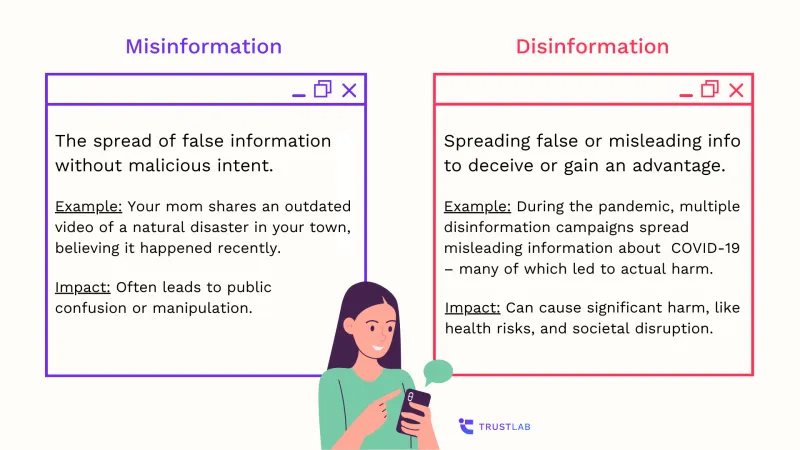
Long before a false story reaches your social media feed, it has traveled through a sophisticated infrastructure of actors, funding sources, and distribution channels designed to make fiction look like fact. Understanding how coordinated disinformation campaigns are built and deployed is no longer an academic exercise — it is a civic necessity. This investigation traces the mechanics of modern propaganda and what it means for the integrity of American public discourse.

Breaking Free from the Gatekeepers: The Independent Journalism Movement Redefining How Americans Get Their News

Breaking Free from the Gatekeepers: The Independent Journalism Movement Redefining How Americans Get Their News

A new generation of journalists is abandoning legacy institutions in favor of direct relationships with their readers, building subscription-supported publications that operate entirely outside the traditional media structure. The movement has produced notable successes and sobering failures in equal measure. Aswar Press explores whether this decentralized model represents a durable evolution in American journalism or a fragile experiment still searching for solid ground.